ONE PIECE OF THE PICTURE / Adventure
TOEM: A Photo Adventure
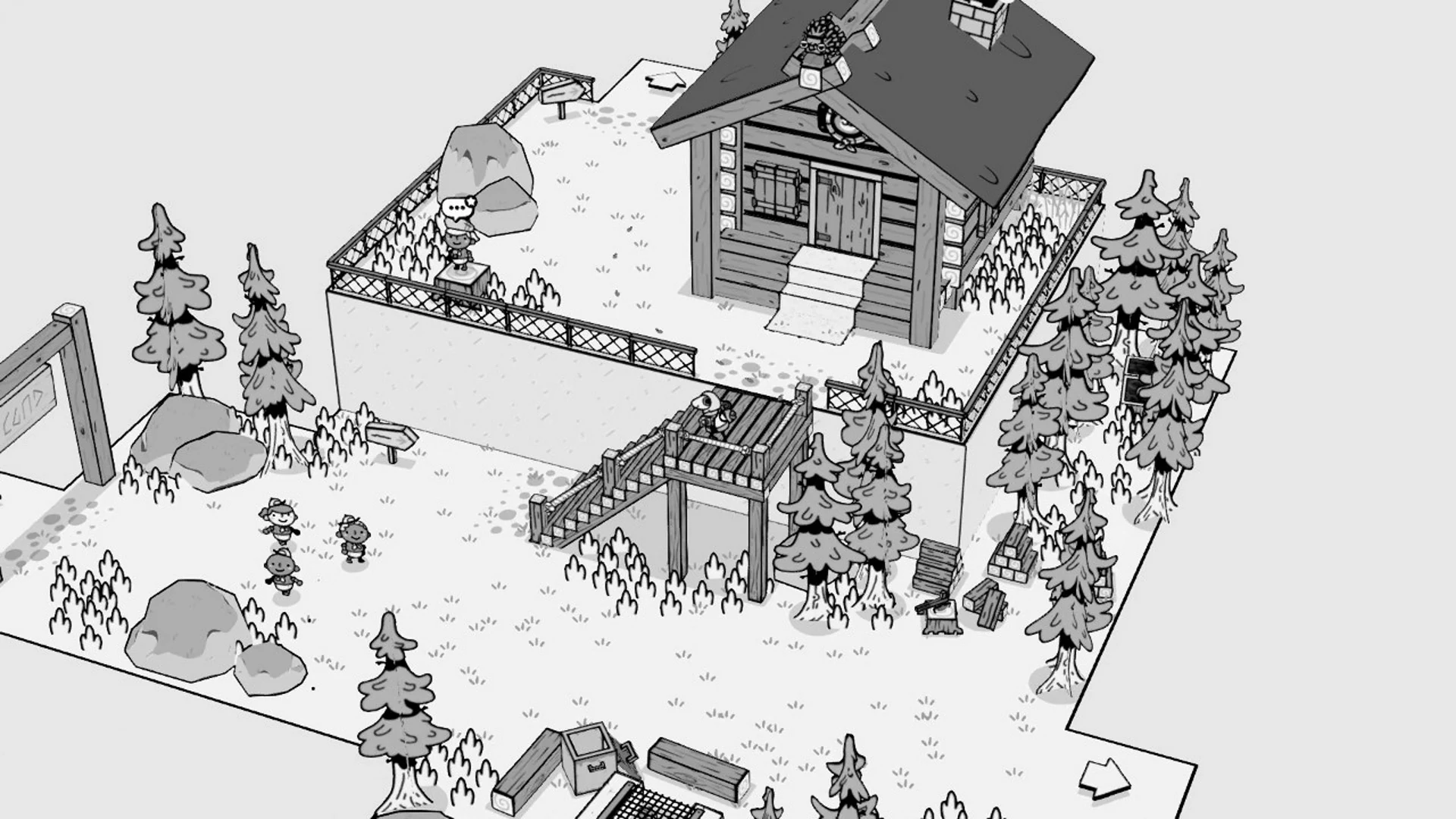
TOEM makes a camera useful by surrounding it with people and details worth noticing. Its compact requests turn gentle exploration into a succession of small, clearly earned discoveries.
Game facts
- Developer
- Something We Made
- Publisher
- Something We Made, popagenda
- Released
- 17 September 2021
- Platforms
- Windows · macOS · Linux (Steam edition)
- Model
- Paid game
- PEGI
- 3 — Nintendo Switch edition; not a separate PC classification
- Players
- Single-player
- Length
- Short
- Difficulty
- 1 / 5 · Gentle
- Steam Deck
- Verified
PEGI source ↗ · Steam Deck status source ↗
Edition: Base game
The score, explained
The interest and responsiveness of the core decisions and actions.
How progression, exploration and goals fit together.
The coherence of the visual, musical and narrative presentation.
How clearly the game explains its rules and offers useful ways to engage.
The depth of optional goals, alternative approaches and reasons to return.
The First Hours
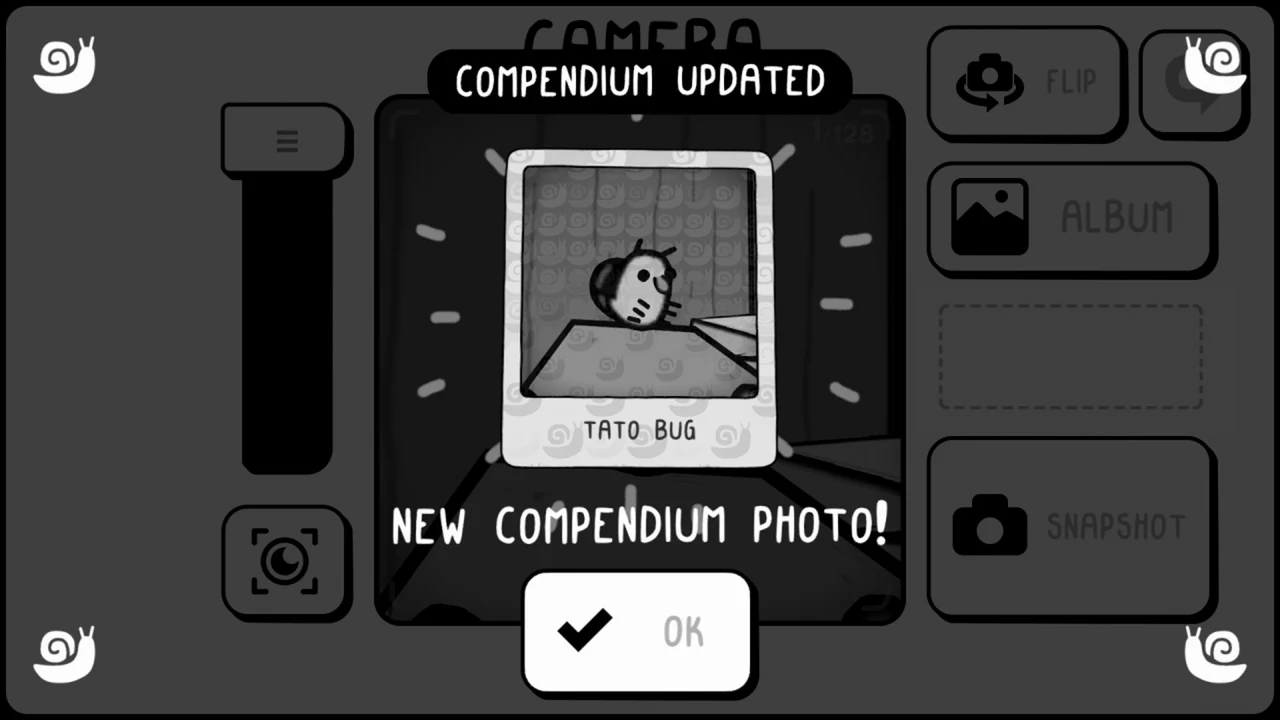
TOEM gives observation a practical reason to happen. Exploring from an overhead view introduces paths, characters and objects; raising the camera asks you to reconsider the same place from a more deliberate angle. Requests make that change of perspective useful. A person may need a photograph of something you walked past, or a scene may contain the visual answer to a problem that initially sounded vague. Progress towards further travel comes through helping people and collecting the associated stamps, so looking closely is linked to a clear destination. The opening avoids making photography a technical examination of settings. Instead, it teaches that a good picture is often the result of noticing what the world is offering and choosing where to stand before pressing the shutter.
Why It Works
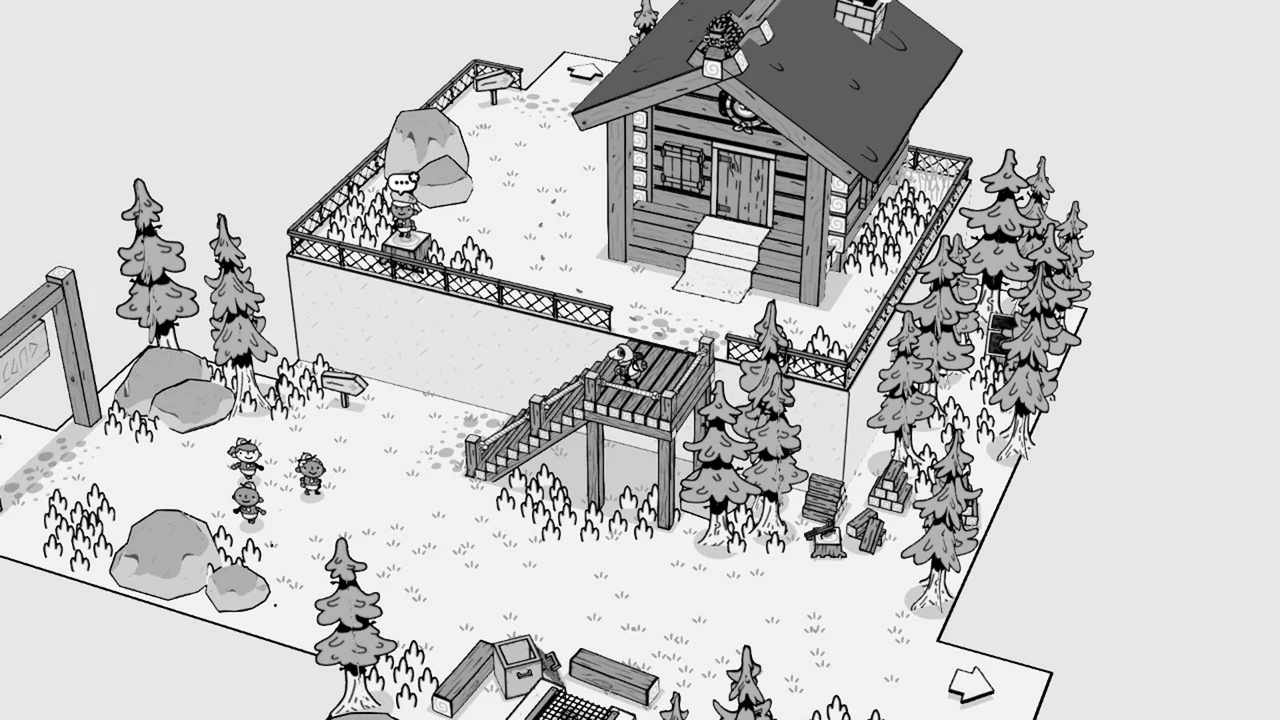
The pleasure of TOEM lies in the conversion from vague awareness to recognition. Something that looked like background decoration becomes the missing subject of a request, and a familiar corner suddenly deserves another visit. Its monochrome presentation supports this by keeping silhouettes and relationships readable, while expressive characters stop the simplicity from feeling sterile. The small environments are an advantage: you can build a mental picture of a place and then revise it as new requests arrive. Photography remains central without demanding realistic simulation, making the tool accessible enough to use playfully. The journey also gives these modest activities a satisfying sequence. Helping someone is not just a mark on a list; it contributes to moving through a world that repeatedly rewards curiosity with a small, friendly response.
Where It Stumbles
Gentleness can become thinness if you want resistance from the systems. TOEM's requests are often more about noticing an overlooked detail than constructing a complex solution, and the camera does not develop into a deep technical instrument. Once you understand the available spaces, some remaining tasks can feel like checking likely locations rather than making a fresh discovery. The compact scale also means that the promise of travel is conveyed through a series of small environments, not a vast landscape to cross. That is part of its efficiency, but it may disappoint someone seeking an expansive adventure. Its warmth is consistent enough that players wanting tension or substantial narrative conflict should look elsewhere. The game is strongest when modest discoveries are sufficient rewards in their own right.
Who Should Play It
TOEM is a useful choice when you want a clear purpose without combat or an elaborate management burden. It suits players who enjoy wandering through a small place, learning its details and helping characters through attention rather than force. The camera provides enough structure to make that wandering feel intentional, while the requests supply approachable stopping points. Compared with a free building toy, there is a more defined journey and a stronger sense of finishing something. Compared with a dense puzzle game, the challenge is lighter and the answers are usually closer to the visible scene. Choose it for a friendly sequence of observations that become little achievements. Choose something more demanding if your ideal reward requires a long chain of deductions or a difficult test of execution.
The verdict
TOEM makes a camera useful by surrounding it with people and details worth noticing. Its compact requests turn gentle exploration into a succession of small, clearly earned discoveries.
Reasons to play
- Photography changes how familiar scenes are examined
- Small requests give exploration a friendly direction
- Monochrome art keeps important shapes easy to recognise
Reasons to think twice
- Most challenges stay deliberately light
- A compact collection of scenes limits the sense of a long expedition
See the game
Assist & accessibility
Parents’ guide
Players: Single-player. No in-game purchase marker in the checked Steam listing. Separate downloadable content may be sold.
Age classification: 3. Nintendo Switch edition; not a separate PC classification
A useful starting tip
Treat each character's request as a clue about what to observe, then look beyond the most obvious subject before taking the photograph.
A different direction
Compare this with Chants of Sennaar: Chants of Sennaar turns uncertainty about words into the engine of an adventure. Its best discoveries come from correcting an assumption that once made perfect sense in a smaller context.
Official sources
Reviewed: November 2026
You might also like
 HadesRead review →
 CelesteRead review →
 Dead CellsRead review →