ONE PIECE OF THE PICTURE / Platformer
Celeste
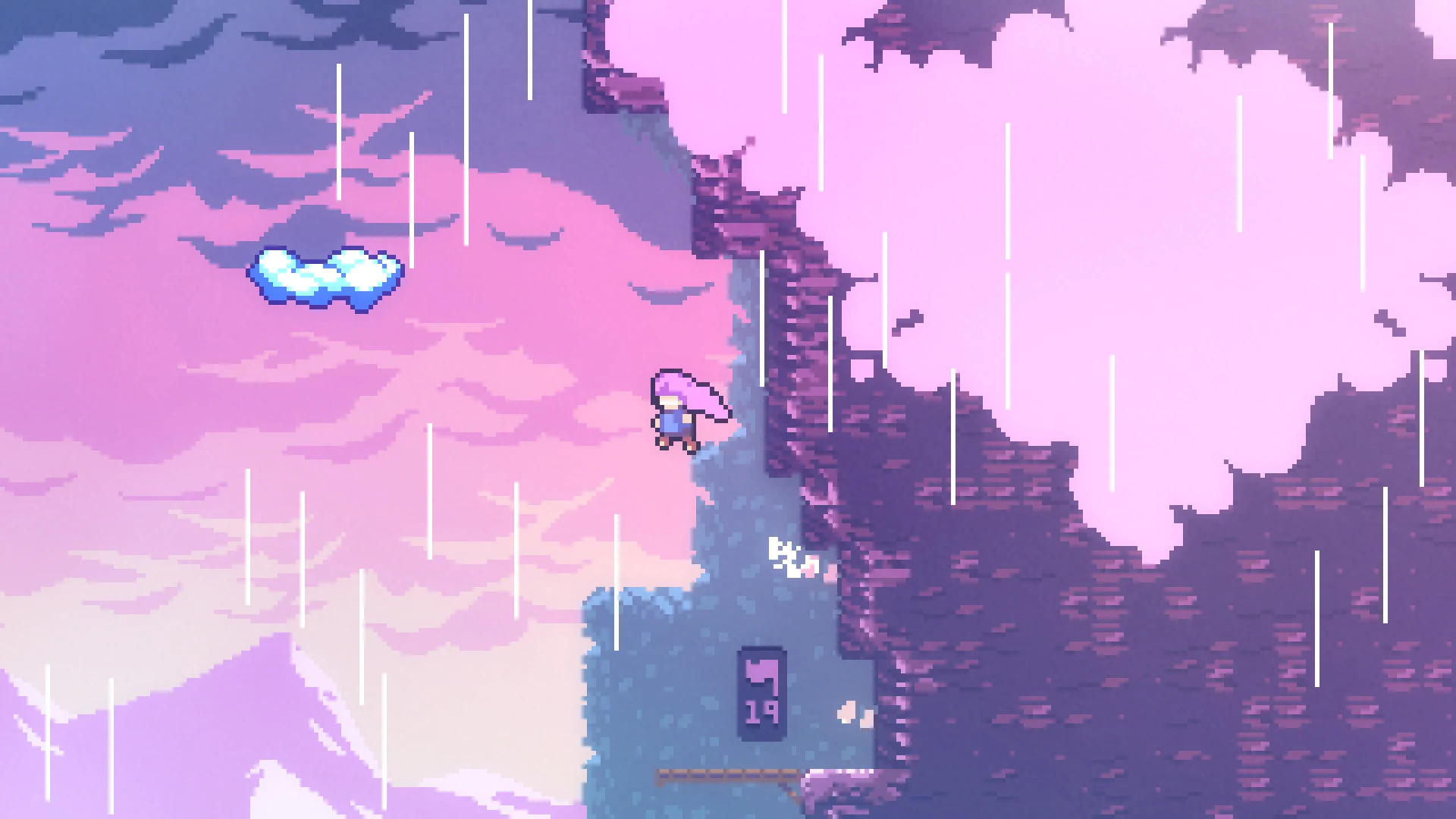
Celeste makes improvement legible: a room that seemed impossible becomes a sequence you understand. Optional challenges and Assist Mode let that central achievement support very different ambitions.
Game facts
- Developer
- Maddy Makes Games Inc., Extremely OK Games, Ltd.
- Publisher
- Maddy Makes Games Inc.
- Released
- 25 January 2018
- Platforms
- Windows · macOS · Linux (Steam edition)
- Model
- Paid game
- PEGI
- 7 — Nintendo Switch edition; not a separate PC classification
- Players
- Single-player
- Length
- Short
- Difficulty
- 4 / 5 · Demanding
- Steam Deck
- Verified
PEGI source ↗ · Steam Deck status source ↗
Edition: Base game
The score, explained
The interest and responsiveness of the core decisions and actions.
How progression, exploration and goals fit together.
The coherence of the visual, musical and narrative presentation.
How clearly the game explains its rules and offers useful ways to engage.
The depth of optional goals, alternative approaches and reasons to return.
The First Hours
Celeste asks for a different kind of attention from a game built around equipment. Madeline's jump, climb and dash already contain the essential vocabulary; the opening mountain rooms teach you to combine them rather than wait for a powerful replacement. A ledge becomes a place to recover, a climb becomes a question about stamina, and the direction of a dash determines what the next input can achieve. Because rooms are small, failure usually leaves a clear question to answer immediately. Optional strawberries introduce a second version of the same space, encouraging a riskier route without blocking the ordinary exit. That separation establishes an unusually useful contract: reaching the summit and proving complete command of every challenge are related ambitions, but they are not identical obligations.
Why It Works
Celeste succeeds because it makes the distance between understanding and execution interesting. You can often see the intended route before you can perform it, so improvement comes from adjusting a specific movement rather than discovering a hidden statistic. New environmental devices change the context for the same controls, keeping the vocabulary compact while expanding what a room can demand. The story gives the climb a personal dimension without needing a long interruption before each challenge. Its themes of self-doubt and persistence fit the act of attempting a room again, though the game remains enjoyable as movement alone. Assist Mode is valuable here: it lets players alter important demands while retaining the shape of the journey, rather than treating a single difficulty setting as the only legitimate route.
Where It Stumbles
Clear failure is still failure, and Celeste asks you to tolerate plenty of repetition. Players who need exploration, combat or a changing inventory to break up precise movement may find its focus restrictive. Optional challenges extend the design impressively, but the jump from finishing the main route to pursuing demanding extra stages can be substantial. The presence of a collectible in a room can also tempt a completion-minded player into turning a manageable climb into an exhausting exercise. It helps to regard those objectives as choices rather than unfinished chores. The story's direct emotional framing will not suit every taste either. These limitations do not undermine the controls, but they matter when deciding whether concentrated practice is the kind of satisfaction you want from your next game.
Who Should Play It
Celeste is an excellent choice when you want a challenge with a visible beginning, an understandable obstacle and a clear moment of improvement. It suits players who find satisfaction in making a difficult action feel deliberate, rather than collecting enough upgrades to overwhelm it. The main story also provides a coherent destination for anyone who prefers a focused adventure to an open-ended catalogue of tasks. Use the optional strawberries and additional stages to choose how far beyond that destination you want to go. Assist Mode makes the recommendation broader, though it cannot turn precision platforming into a different genre. Pick another game if you want improvisational builds or quiet construction; pick Celeste when the movement itself is what you want to learn and enjoy.
The verdict
Celeste makes improvement legible: a room that seemed impossible becomes a sequence you understand. Optional challenges and Assist Mode let that central achievement support very different ambitions.
Reasons to play
- Brief rooms make mistakes easy to understand
- Optional strawberries separate curiosity from basic progression
- Assist Mode offers useful control over the challenge
Reasons to think twice
- Repeated precision attempts are the main activity
- Later optional routes demand a large step in execution
See the game
Assist & accessibility
Explore the available settings and control options on the official game page before choosing your setup.
Parents’ guide
Players: Single-player. No in-game purchase marker in the checked Steam listing. Separate downloadable content may be sold.
Age classification: 7. Nintendo Switch edition; not a separate PC classification
A useful starting tip
Work out the intended sequence of jumps, dashes and rests in a difficult screen before trying to execute it faster.
A different direction
Compare this with Into the Breach: Into the Breach replaces reaction speed with responsibility: the danger is visible, and the challenge is choosing which consequences you can prevent. Small boards support unusually consequential tactical decisions.
Official sources
Reviewed: November 2026
You might also like
 HadesRead review →
 Dead CellsRead review →
 DorfromantikRead review →