ONE PIECE OF THE PICTURE / Strategy
Dorfromantik
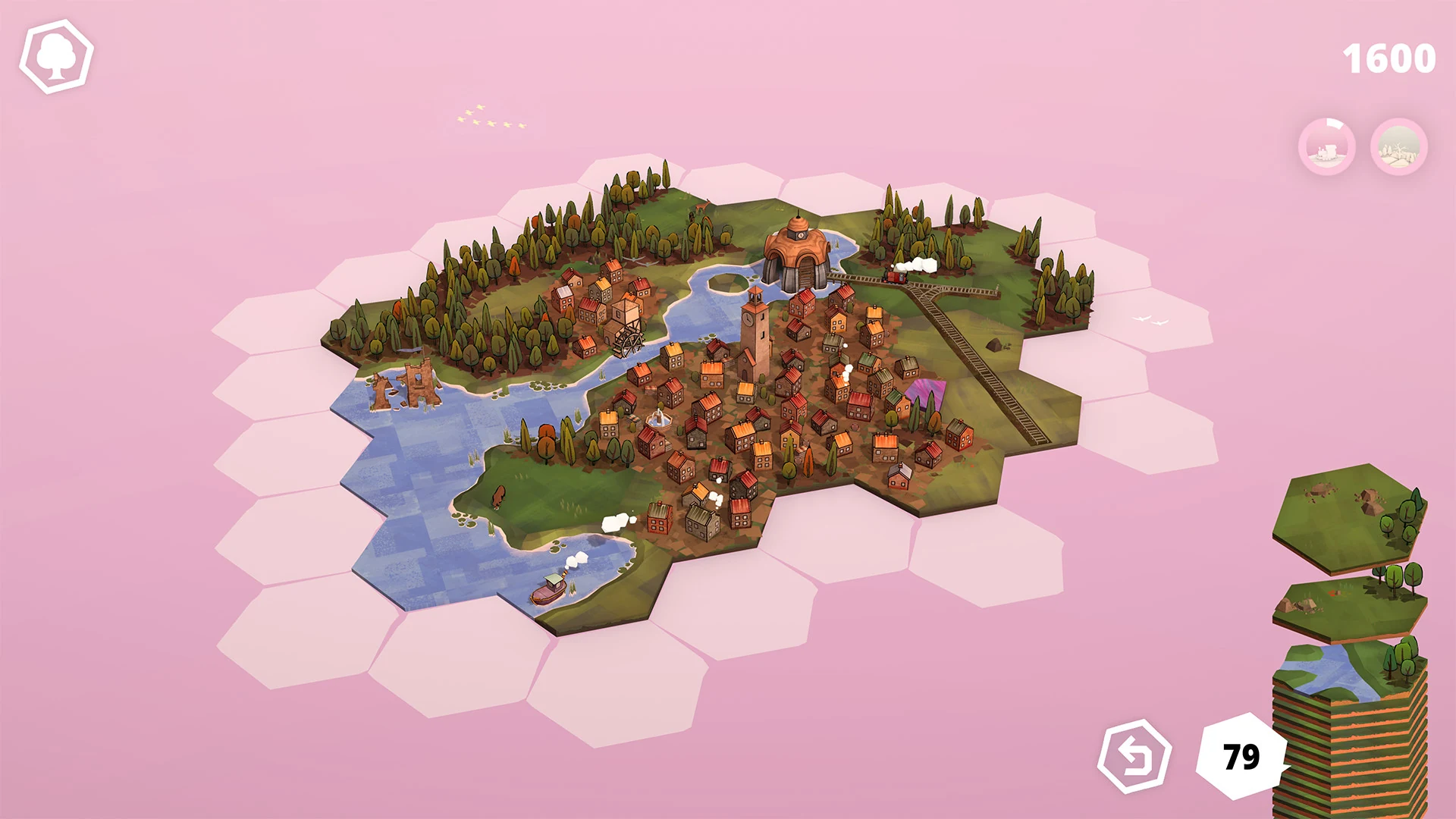
Dorfromantik turns a peaceful landscape into a chain of small spatial commitments. Its charm comes from choosing how much optimisation you want to bring to a world that remains pleasant to arrange.
Game facts
- Developer
- Toukana Interactive
- Publisher
- Toukana Interactive
- Released
- 28 April 2022
- Platforms
- Windows · macOS (Steam edition)
- Model
- Paid game
- PEGI
- 3 — Nintendo Switch edition; not a separate PC classification
- Players
- Single-player
- Length
- Medium
- Difficulty
- 2 / 5 · Approachable
- Steam Deck
- Verified
PEGI source ↗ · Steam Deck status source ↗
Edition: Base game
The score, explained
The interest and responsiveness of the core decisions and actions.
How progression, exploration and goals fit together.
The coherence of the visual, musical and narrative presentation.
How clearly the game explains its rules and offers useful ways to engage.
The depth of optional goals, alternative approaches and reasons to return.
The First Hours
Dorfromantik places its challenge in the gap between an attractive arrangement and a useful one. A hexagonal tile might extend a forest beautifully while making a nearby village objective harder to finish. Another may keep a railway viable but leave an awkward edge for later. The opening makes these commitments easy to understand because the landscape itself displays them. You rotate a piece, consider its neighbours and decide which opportunity deserves priority. Objectives attached to features create reasons to plan beyond the immediate placement, while the remaining tile supply gives those plans a practical limit. This is a quiet game with actual decisions, rather than a decorative screen that happens to award points. Its calm comes from the pace at which you can consider the problem.
Why It Works
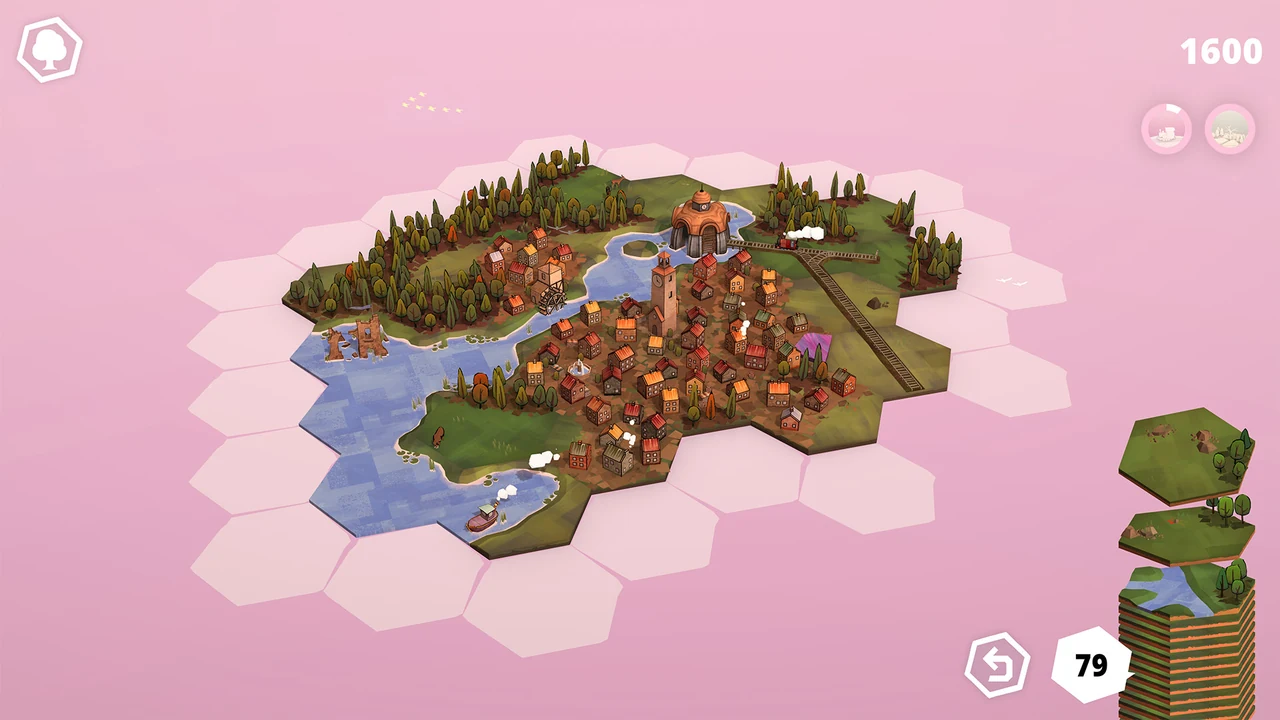
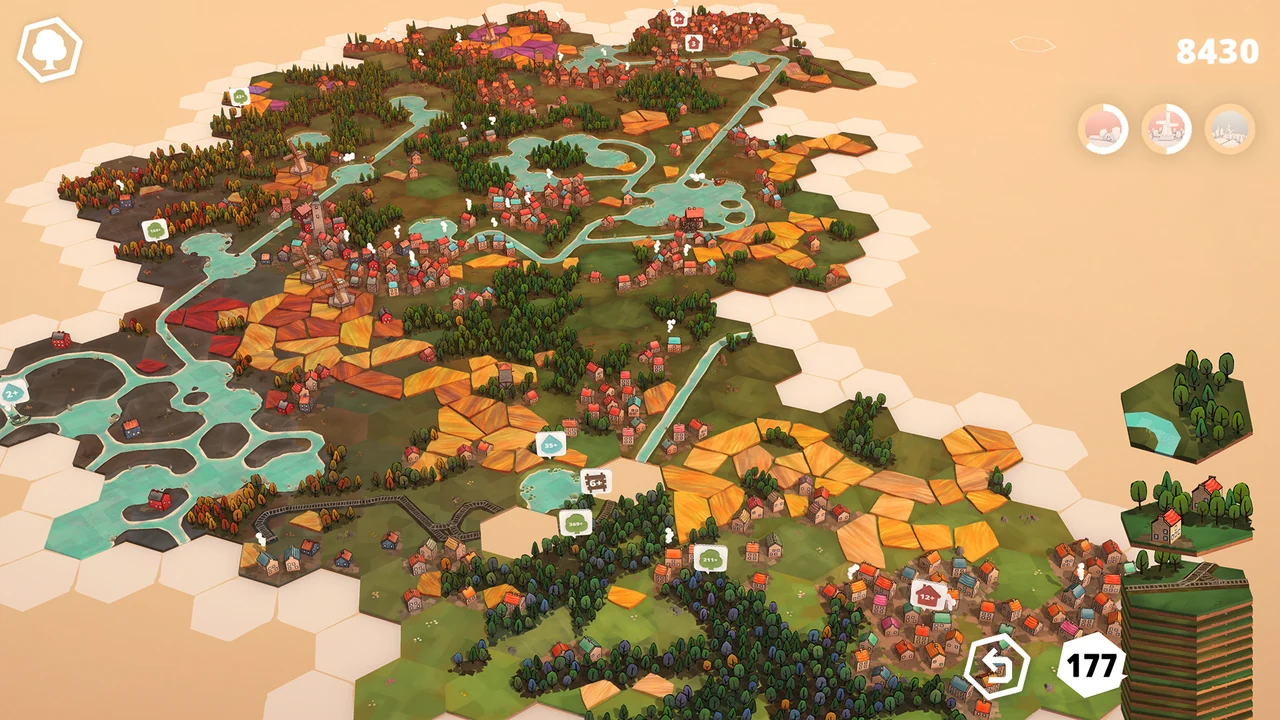
The design works by making local choices accumulate into a visible whole. Matching an edge provides a small satisfaction now; preserving space for a larger cluster creates a longer concern. Railways and waterways add constraints that make some placements harder to treat as interchangeable. Yet the landscape remains readable, so a developing plan can be inspected without a dense management interface. That balance is the important achievement. You can care about the score while also caring about how a village sits beside a field, and neither motive feels entirely separate from the act of playing. The game also lets you pause over a decision without pressure from an advancing population or production chain. Thoughtfulness is invited by the system rather than demanded by a ticking clock.
Where It Stumbles
The attractive scenery can create the wrong expectation. Dorfromantik does not turn its villages into communities with individual needs or its fields into a detailed agricultural economy. The central activity remains tile placement, with much of the depth coming from objectives, matching and preserving future possibilities. If that puzzle stops appealing, the landscape alone may not provide enough variety. Random tile availability can also interrupt a carefully imagined shape, asking you to adapt when you would rather complete a particular arrangement. Some players will find that uncertainty energising; others will feel it conflicts with the promise of relaxation. Pursuing an efficient score can make the apparently gentle game surprisingly exacting, especially when a pleasing visual decision closes off a valuable space needed later.
Who Should Play It
Dorfromantik belongs on the shortlist when you want time to think without the weight of a large strategy campaign. It offers enough consequence to make placement meaningful while keeping the physical action simple and the results easy to inspect. Players who enjoy arranging things will find a clear invitation, but the strongest fit is someone who also likes a little resistance from rules and limited options. Choose Tiny Glade instead if the main goal is free construction without a scoring problem. Choose a fuller city simulation if you want residents, budgets and services to manage. Dorfromantik occupies the useful middle ground: a landscape you shape through thoughtful compromises, with a satisfying picture emerging from the same decisions that keep the puzzle alive.
The verdict
Dorfromantik turns a peaceful landscape into a chain of small spatial commitments. Its charm comes from choosing how much optimisation you want to bring to a world that remains pleasant to arrange.
Reasons to play
- Scoring and scenery share the same placement decisions
- Landscape objectives reward looking beyond the next tile
- Clear visual feedback keeps planning approachable
Reasons to think twice
- Tile availability can obstruct a desired layout
- It offers little of a city's population or economy simulation
See the game
Assist & accessibility
Explore the available settings and control options on the official game page before choosing your setup.
Parents’ guide
Players: Single-player. No in-game purchase marker in the checked Steam listing. Separate downloadable content may be sold.
Age classification: 3. Nintendo Switch edition; not a separate PC classification
A useful starting tip
Consider the open edges you will leave behind before placing a tile that completes the most obvious immediate objective.
A different direction
Compare this with Tiny Glade: Tiny Glade offers the pleasure of shaping a place without first earning the resources to build it. Its responsive details make small adjustments rewarding, provided you are happy to supply your own purpose.
Official sources
Reviewed: November 2026
You might also like
 HadesRead review →
 CelesteRead review →
 Dead CellsRead review →