ONE PIECE OF THE PICTURE / Roguelike
Dead Cells
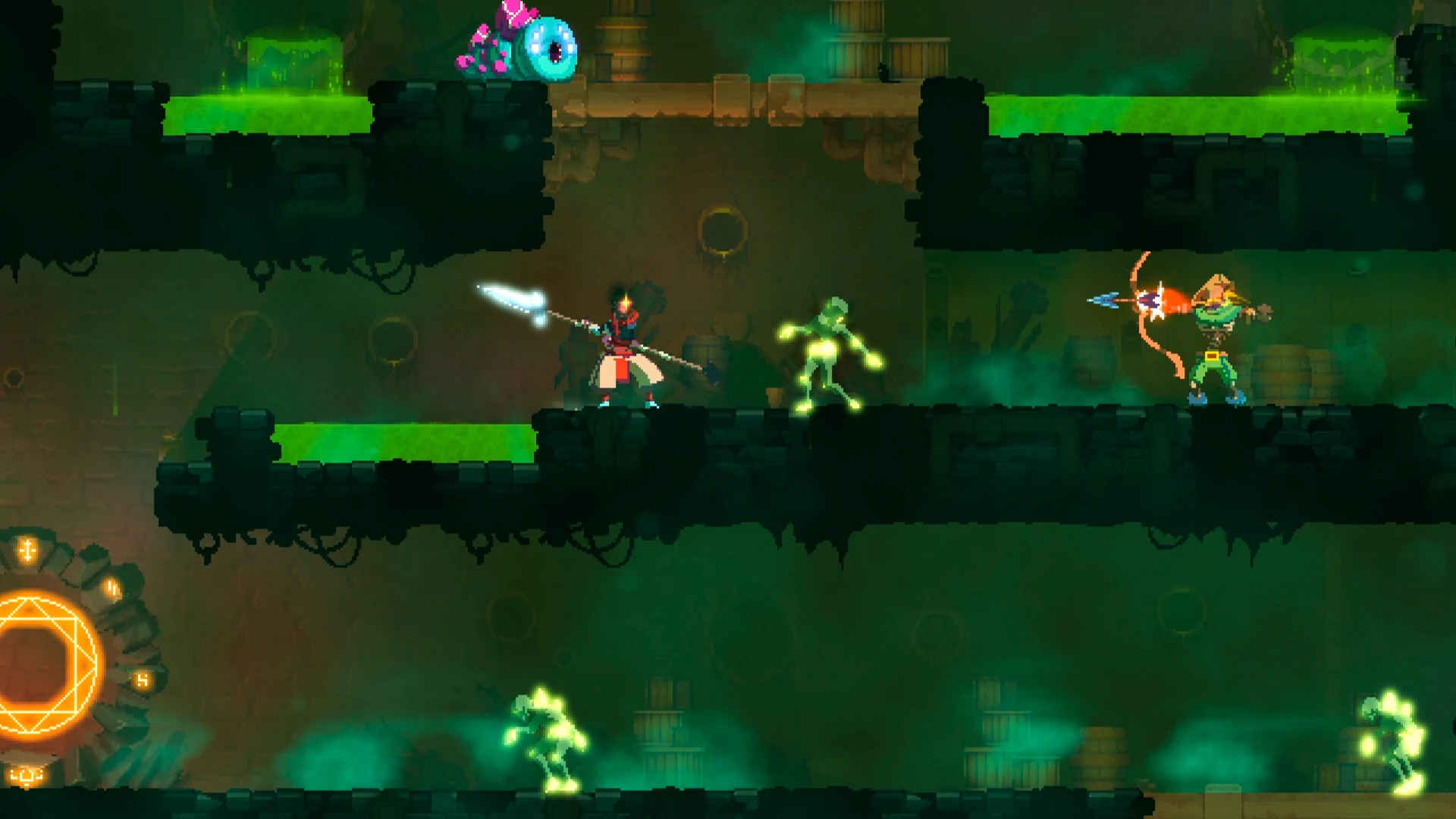
Dead Cells offers restless, equipment-driven action in which committing to an unfamiliar weapon can be as exciting as finding a stronger one. Its repeated runs favour appetite for experimentation over attachment to a single route.
Game facts
- Developer
- Motion Twin
- Publisher
- Motion Twin
- Released
- 6 August 2018
- Platforms
- Windows · macOS · Linux (Steam edition)
- Model
- Paid game
- PEGI
- 16 · Violence — Steam UK listing
- Players
- Single-player
- Length
- Medium
- Difficulty
- 4 / 5 · Demanding
- Steam Deck
- Verified
PEGI source ↗ · Steam Deck status source ↗
Edition: Base game
The score, explained
The interest and responsiveness of the core decisions and actions.
How progression, exploration and goals fit together.
The coherence of the visual, musical and narrative presentation.
How clearly the game explains its rules and offers useful ways to engage.
The depth of optional goals, alternative approaches and reasons to return.
The First Hours
Dead Cells starts with an appealing contradiction: movement feels immediate, but understanding the possibilities of an equipment set takes longer. You can jump, roll and attack confidently before knowing which combinations will suit the next stretch. A new weapon or deployable skill therefore changes more than a number on a menu. It can alter whether you rush enemies, keep them at a distance or create an opening before committing. Routes through the biomes add another choice to that process, making an attempt feel like a journey with branches rather than a fixed sequence of arenas. Cells collected along the way support permanent unlocks, while the equipment of the current run remains vulnerable. That distinction makes each successful stretch useful without making every loss painless.
Why It Works
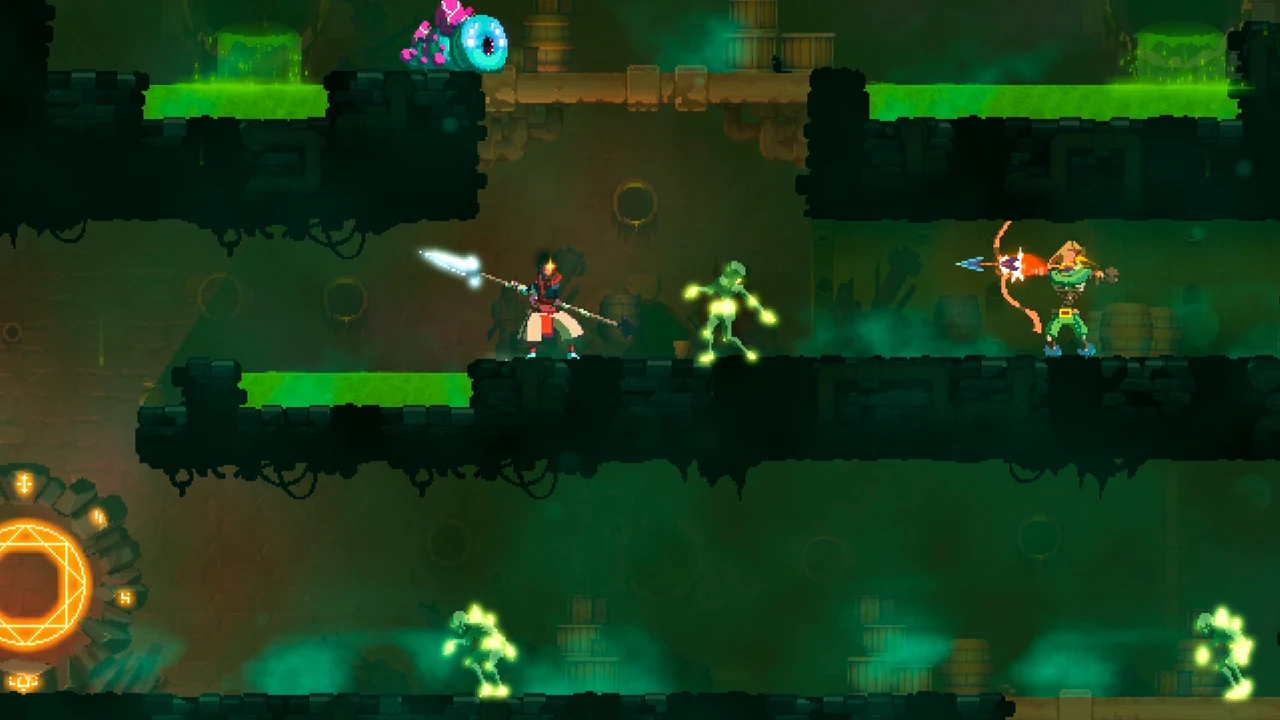
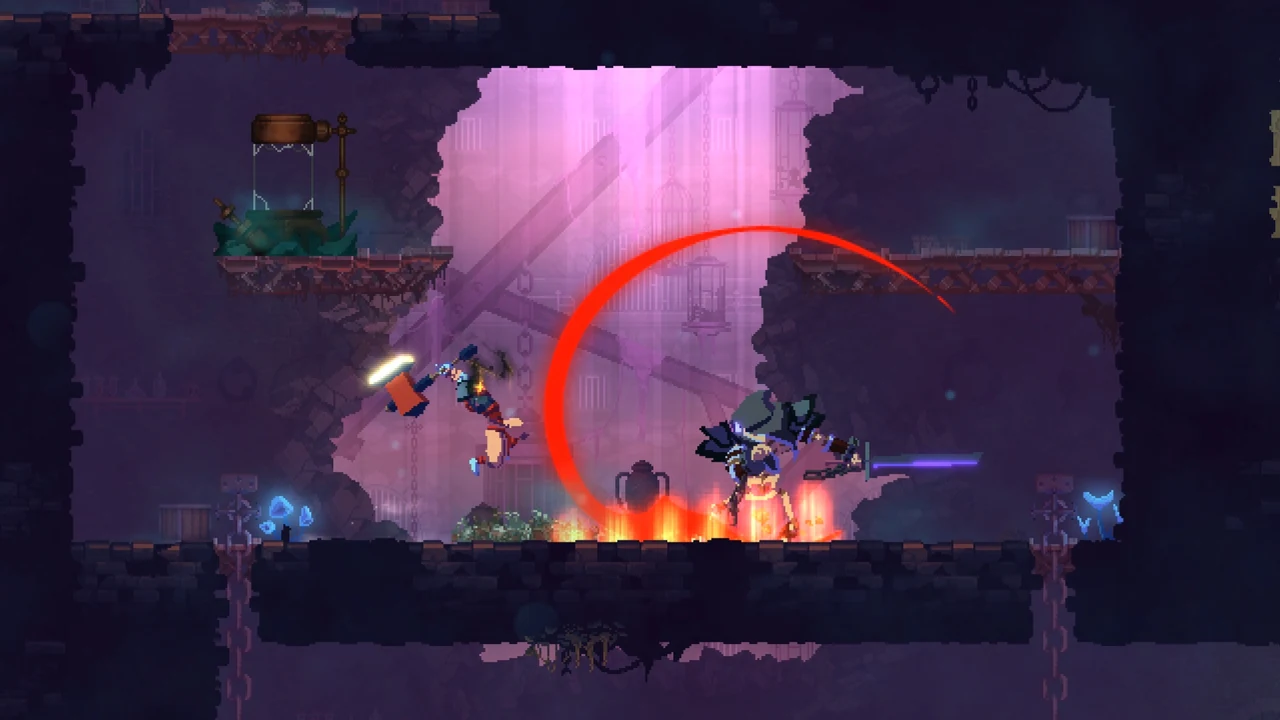
The best part of Dead Cells is the way movement and loadout decisions keep answering each other. A powerful attack may require a safer opening; a trap can create that opening; a roll can rescue the position when the plan fails. Finding a comfortable combination feels earned because you have to translate its potential into action. Branching biomes also let familiarity influence a route without removing the appeal of trying another direction. Permanent unlocks widen the pool of possibilities, so repeated attempts develop the player's range as well as the character's options. There is a satisfying tension between taking equipment that fits your habits and accepting something unfamiliar enough to change those habits. The game draws much of its longevity from keeping that decision active.
Where It Stumbles
That equipment-led variety comes with an uneven rhythm. A run can find a convincing identity early, while another spends longer feeling provisional. Losing a combination you enjoyed means returning to the search rather than simply retrying the encounter with exactly the same tools. Players who prefer the controlled repetition of an authored platforming room may find this unnecessarily wasteful. Repeated opening areas can also become a visible toll before the destinations that currently interest you most. The expanding set of unlocks is rewarding, but it asks for patience with a game whose most interesting possibilities are revealed through recurrence. Fast movement should not be mistaken for effortless progress: haste can turn a promising route into a short and expensive lesson about an enemy's reach.
Who Should Play It
Choose Dead Cells if discovering how to fight is as appealing as discovering where to go. It particularly suits players who enjoy action-platforming controls but want their decisions about equipment to change the texture of each attempt. Unlike a tightly scripted challenge, it encourages adaptation when the available tools refuse to match a preferred plan. Unlike a leisurely exploration game, its routes remain tied to immediate danger and the possibility of losing a good setup. That combination is excellent for someone who treats failure as the start of another experiment. It is less convincing for someone attached to permanent possession of every useful item. The central question is whether a new run feels like renewed possibility or a demand to repeat work already completed.
The verdict
Dead Cells offers restless, equipment-driven action in which committing to an unfamiliar weapon can be as exciting as finding a stronger one. Its repeated runs favour appetite for experimentation over attachment to a single route.
Reasons to play
- Weapons and skills create sharply different combat rhythms
- Branching routes give attempts a sense of direction
- Responsive movement connects traversal and fighting
Reasons to think twice
- Failure discards the current run's equipment
- Unlocks and repeated areas can make early progress feel uneven
See the game
Assist & accessibility
Explore the available settings and control options on the official game page before choosing your setup.
Parents’ guide
Players: Single-player. No in-game purchase marker in the checked Steam listing. Separate downloadable content may be sold.
Age classification: 16. Violence Steam UK listing
A useful starting tip
Choose equipment that supports a recognisable combat approach, then use route knowledge to avoid fighting in positions that undermine it.
A different direction
Compare this with Hades: Hades joins quick combat decisions to a welcoming rhythm of return, conversation and another attempt. Its strongest reward is discovering a build that changes how a familiar weapon behaves.
Official sources
Reviewed: November 2026
You might also like
 HadesRead review →
 CelesteRead review →
 DorfromantikRead review →