ONE PIECE OF THE PICTURE / Puzzle
Chants of Sennaar
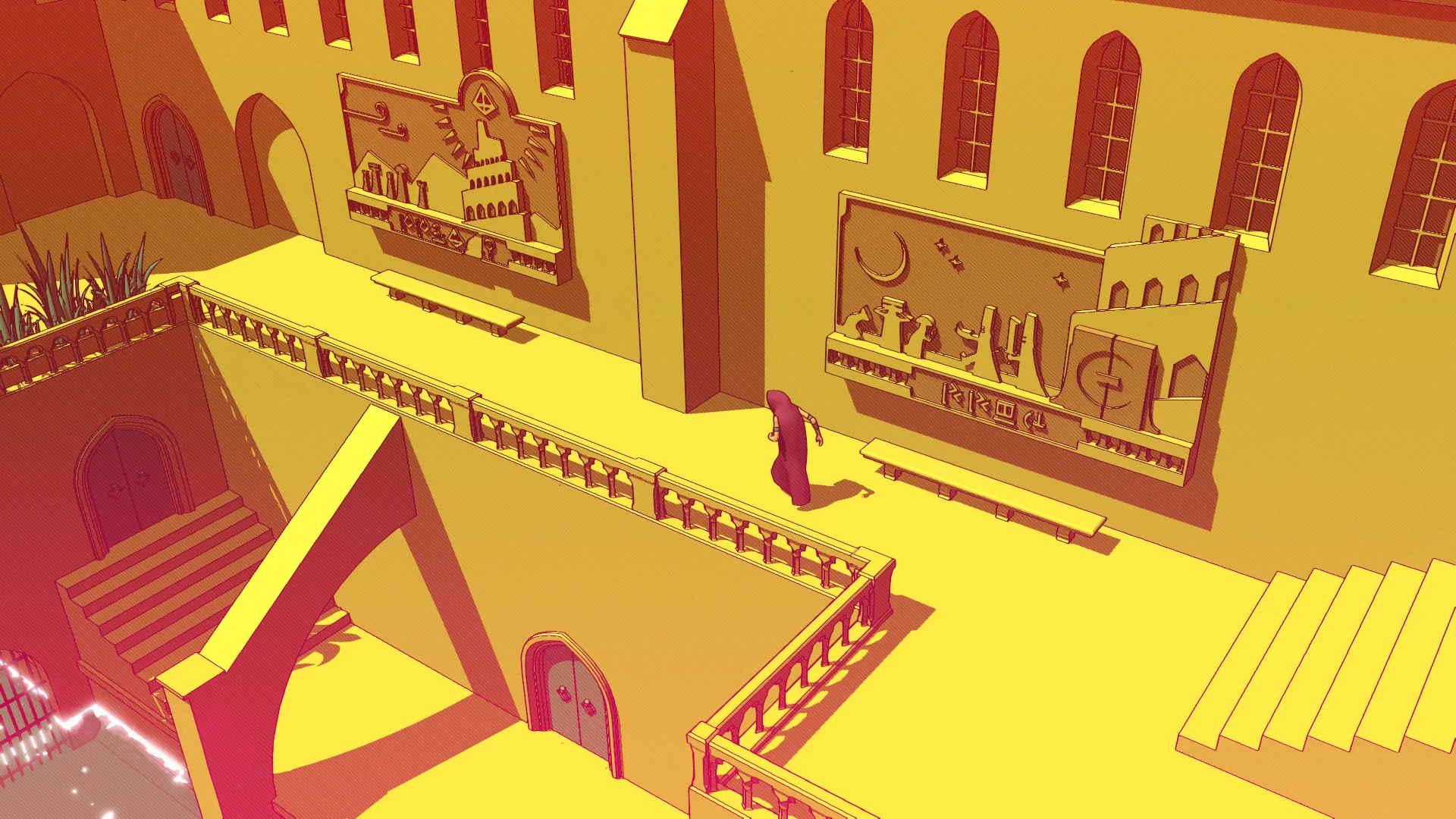
Chants of Sennaar turns uncertainty about words into the engine of an adventure. Its best discoveries come from correcting an assumption that once made perfect sense in a smaller context.
Game facts
- Developer
- Rundisc
- Publisher
- Focus Entertainment
- Released
- 5 September 2023
- Platforms
- Windows (Steam edition)
- Model
- Paid game
- PEGI
- 7 — Nintendo Switch download edition edition; not a separate PC classification
- Players
- Single-player
- Length
- Short
- Difficulty
- 3 / 5 · Moderate
- Steam Deck
- Verified
PEGI source ↗ · Steam Deck status source ↗
Edition: Base game
The score, explained
The interest and responsiveness of the core decisions and actions.
How progression, exploration and goals fit together.
The coherence of the visual, musical and narrative presentation.
How clearly the game explains its rules and offers useful ways to engage.
The depth of optional goals, alternative approaches and reasons to return.
The First Hours
Chants of Sennaar makes an unfamiliar sign more interesting than a familiar objective marker. At the bottom of its tower, words arrive through people, actions and surroundings before they arrive as reliable definitions. You begin with guesses: perhaps a symbol refers to a person, perhaps to an action, perhaps to something the scene only seems to emphasise. The notebook gives those guesses a place to live, turning uncertainty into a working part of the interface. Progress comes from collecting enough context to test an interpretation rather than simply clicking every available object. As different communities enter the picture, language becomes more than a substitution puzzle. You need to notice what a group values and how its daily life gives meaning to the signs it uses around you.
Why It Works
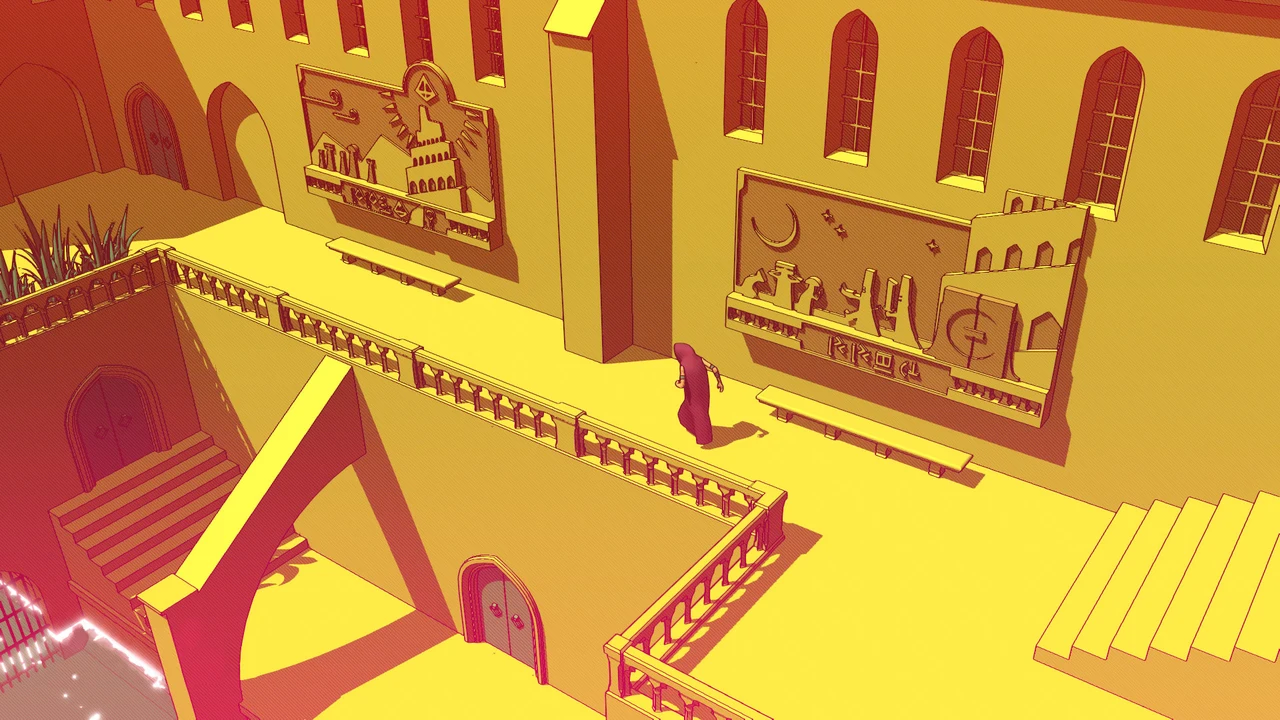
The strongest satisfaction is not merely learning a word; it is discovering why an earlier guess was inadequate. A new scene can expose a difference you previously overlooked, making a return to familiar dialogue feel productive. The notebook supports that process by separating your provisional understanding from vocabulary that has been confirmed. Distinct communities then broaden the problem, so the tower's progress is measured through communication as much as movement. Visual staging does essential work here: gestures, objects and arrangements provide evidence that a dictionary cannot yet supply. The result is a puzzle adventure in which close observation has a sustained purpose. You are not collecting decorative lore alongside the main challenge. Understanding what people are saying is the main challenge, and it changes how the environment can be navigated.
Where It Stumbles
The same dependence on interpretation can cause a stubborn stall. A plausible but incorrect assumption may make several later scenes appear confusing, and it is not always obvious which part of your working vocabulary needs revision. Players who prefer every puzzle to have a narrowly isolated clue set may find that uncertainty tiring. Stealth sequences also interrupt the language work, replacing reflective deduction with the need to move at the appropriate moment. They provide a change of pace, but not necessarily the kind that makes the game's central idea stronger for every player. The experience also loses some of its distinctive tension once the languages are familiar. A return can still reveal visual and narrative details, but it cannot fully recreate the first process of building meaning from incomplete evidence.
Who Should Play It
Chants of Sennaar is a strong fit when you want observation to lead to a definite intellectual reward. It particularly suits players willing to revise an explanation rather than defend the first one that seemed plausible. The tower gives that work a clear sense of travel, so the experience remains an adventure rather than a collection of disconnected language exercises. Compared with a conventional dialogue-driven story, understanding the conversation is itself an achievement. Compared with a spatial puzzle, the uncertainty depends more on context and interpretation than the visible position of objects. Choose it when that distinction sounds appealing, and allow yourself to return to earlier assumptions. The pleasure lies in making the world gradually more legible, not in understanding every symbol the moment it first appears.
The verdict
Chants of Sennaar turns uncertainty about words into the engine of an adventure. Its best discoveries come from correcting an assumption that once made perfect sense in a smaller context.
Reasons to play
- Language learning gives observation a strong purpose
- The notebook makes provisional understanding tangible
- Different communities change how familiar signs are interpreted
Reasons to think twice
- Some stealth interrupts the strongest puzzle rhythm
- Solved vocabulary leaves less uncertainty on a return visit
See the game

Assist & accessibility
Parents’ guide
Players: Single-player. No in-game purchase marker in the checked Steam listing. Separate downloadable content may be sold.
Age classification: 7. Nintendo Switch download edition edition; not a separate PC classification
A useful starting tip
Keep a word meaning provisional until it explains more than one context; a plausible first guess can make later scenes misleading.
A different direction
Compare this with COCOON: COCOON finds remarkable variety in deciding where a world belongs. Its nested spaces reward clear spatial thinking while keeping the physical controls almost effortless to grasp.
Official sources
Reviewed: November 2026
You might also like
 HadesRead review →
 CelesteRead review →
 Dead CellsRead review →