ONE PIECE OF THE PICTURE / Puzzle adventure
COCOON
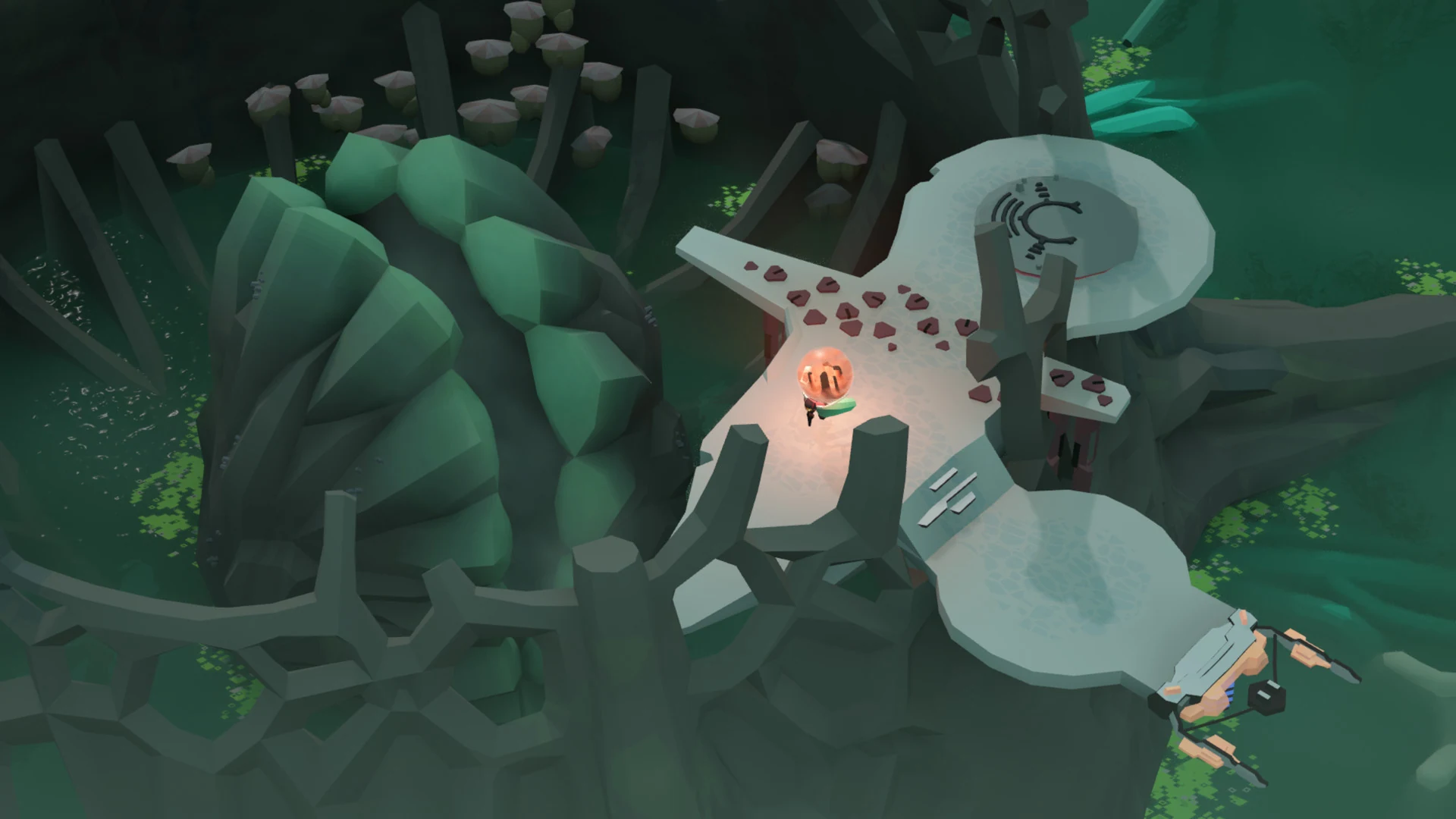
COCOON finds remarkable variety in deciding where a world belongs. Its nested spaces reward clear spatial thinking while keeping the physical controls almost effortless to grasp.
Game facts
- Developer
- Geometric Interactive
- Publisher
- Annapurna Interactive
- Released
- 29 September 2023
- Platforms
- Windows (Steam edition)
- Model
- Paid game
- PEGI
- 7 · Violence, Fear — Steam UK listing
- Players
- Single-player
- Length
- Short
- Difficulty
- 3 / 5 · Moderate
- Steam Deck
- Verified
PEGI source ↗ · Steam Deck status source ↗
Edition: Base game
The score, explained
The interest and responsiveness of the core decisions and actions.
How progression, exploration and goals fit together.
The coherence of the visual, musical and narrative presentation.
How clearly the game explains its rules and offers useful ways to engage.
The depth of optional goals, alternative approaches and reasons to return.
The First Hours
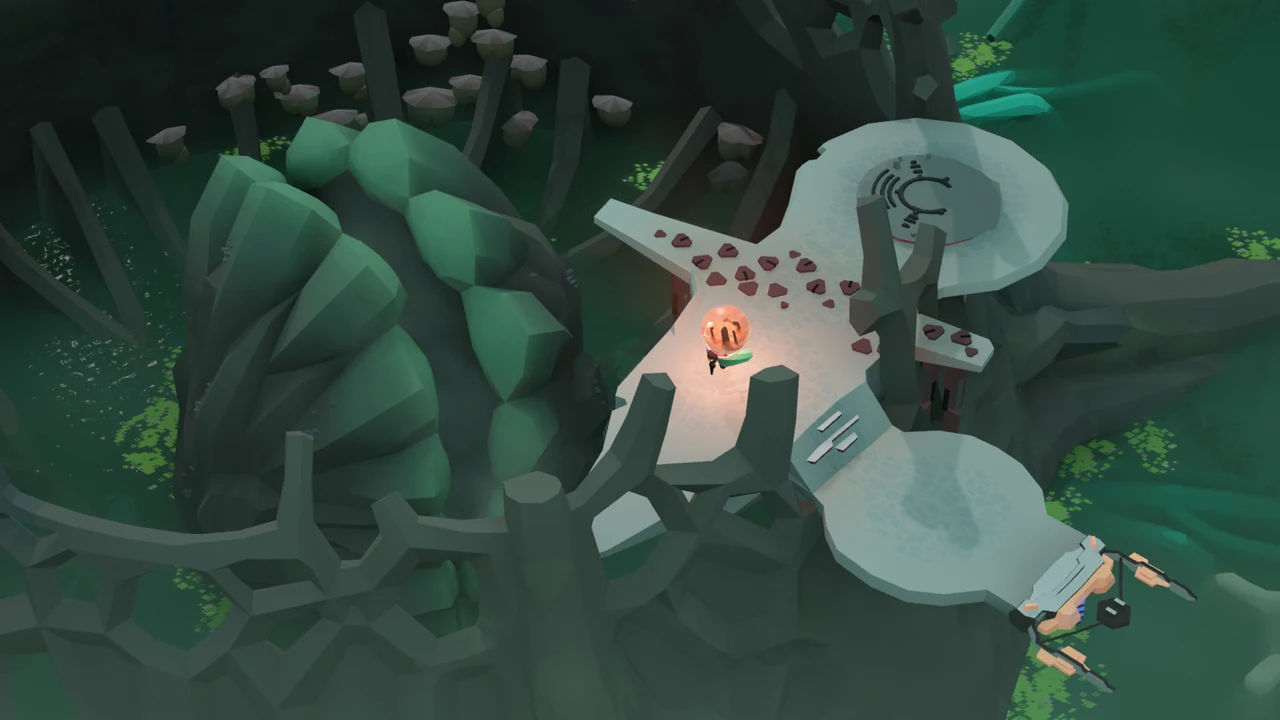
COCOON begins with an object you can carry and then reveals that the object contains a world. That idea is striking, but the opening succeeds because it quickly turns the surprise into a usable rule. Carrying, placing and entering an orb become actions you can reason about, even as their implications become stranger. A path blocked in one space might depend on what you brought from another, while a socket makes the position of a world matter outside it. The controls stay light enough that the challenge is not remembering a large collection of commands. Instead, you start asking where an object must be, which space you should occupy and what relationship between the two will make the next passage possible. The game builds confidence through those relationships.
Why It Works
COCOON's cleverness is most convincing when a complicated arrangement resolves into a simple action. You may spend time understanding a situation, then solve it by moving one orb to a position whose importance has become clear. The presentation helps by making devices and connections visually distinct without filling the screen with instructions. As the worlds acquire different uses, carrying one becomes a choice about both destination and capability. That layered purpose gives the central idea room to develop without requiring constant new interface elements. The game also controls the order of its revelations carefully, so an earlier action can prepare you for a later configuration. Its best moments make an unfamiliar spatial rule feel inevitable once understood, which is a particularly satisfying form of puzzle discovery.
Where It Stumbles
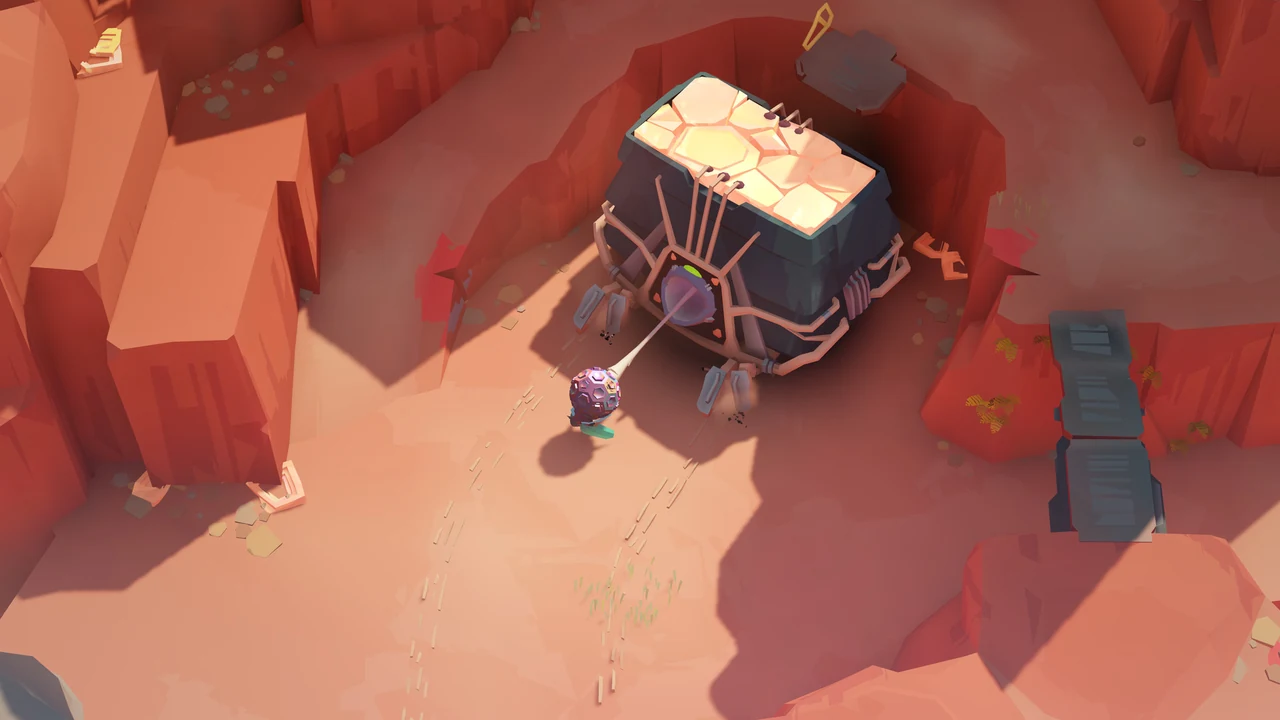
The clarity comes partly from strong direction. COCOON carefully arranges the problems you encounter, and players seeking a broad space for alternative solutions may find that progression narrow. Understanding the intended relationship is usually the objective; inventing a personal construction or radically different route is not. The lack of explanatory dialogue keeps the world intriguing, but it also leaves less narrative detail for someone who wants explicit answers about the setting. Boss encounters introduce another shift, placing more emphasis on movement and timing than on quietly rearranging a spatial problem. Those sequences add variety, though they may be less appealing to a player drawn specifically to unhurried deduction. Once the central solutions are familiar, the mystery of how the spaces connect naturally has less power on a return visit.
Who Should Play It
Choose COCOON when you want a focused puzzle adventure with a concept that can be understood physically rather than through pages of rules. It suits players who enjoy looking at a system until its relationships click into place. The small set of controls makes it approachable, but the nested arrangements still ask for attention and patience. Compared with Chants of Sennaar, the main reasoning is spatial rather than linguistic. Compared with a construction game, the pleasure comes from discovering a designed solution rather than setting your own objective. The occasional action sequence should also be part of the decision. With those expectations, COCOON offers a particularly clean meeting of imagination and usability: the premise remains strange, while the actions needed to explore it remain reassuringly concrete.
The verdict
COCOON finds remarkable variety in deciding where a world belongs. Its nested spaces reward clear spatial thinking while keeping the physical controls almost effortless to grasp.
Reasons to play
- Carrying worlds creates an immediately distinctive puzzle language
- Visual staging communicates relationships with little text
- New arrangements deepen a compact set of actions
Reasons to think twice
- The route is strongly directed
- Boss encounters briefly exchange deliberation for movement and timing
See the game
Assist & accessibility
Explore the available settings and control options on the official game page before choosing your setup.
Parents’ guide
Players: Single-player. No in-game purchase marker in the checked Steam listing. Separate downloadable content may be sold.
Age classification: 7. Violence · Fear Steam UK listing
A useful starting tip
When an arrangement seems impossible, reconsider which world should contain which orb before searching for a new switch.
A different direction
Compare this with Chants of Sennaar: Chants of Sennaar turns uncertainty about words into the engine of an adventure. Its best discoveries come from correcting an assumption that once made perfect sense in a smaller context.
Official sources
Reviewed: November 2026
You might also like
 HadesRead review →
 CelesteRead review →
 Dead CellsRead review →