ONE PIECE OF THE PICTURE / Management adventure
Spiritfarer: Farewell Edition

Spiritfarer connects management to attachment: a meal, a room and a completed request matter because someone aboard needs them. Its gentle routines gain weight from the departures they help prepare.
Game facts
- Developer
- Thunder Lotus
- Publisher
- Thunder Lotus
- Released
- 18 August 2020
- Platforms
- Windows · macOS · Linux (Steam edition)
- Model
- Paid game
- PEGI
- 12 · Mild Swearing, Sexual Innuendo — Steam UK listing
- Players
- Single-player · Multi-player · Co-op · Shared/Split Screen Co-op
- Length
- Long
- Difficulty
- 2 / 5 · Approachable
- Steam Deck
- Verified
PEGI source ↗ · Steam Deck status source ↗
Edition: Base game
The score, explained
The interest and responsiveness of the core decisions and actions.
How progression, exploration and goals fit together.
The coherence of the visual, musical and narrative presentation.
How clearly the game explains its rules and offers useful ways to engage.
The depth of optional goals, alternative approaches and reasons to return.
The First Hours
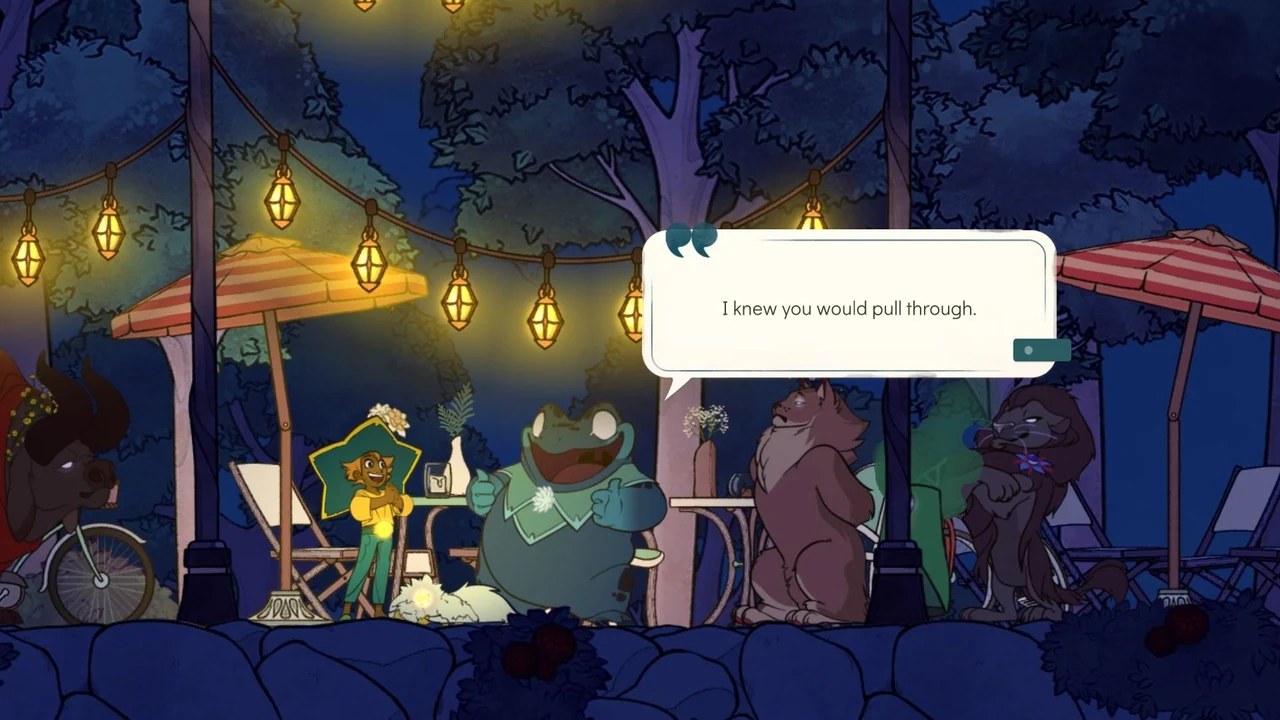
Spiritfarer gives Stella a boat, passengers to care for and a growing collection of practical tasks. Planting, gathering, cooking and building initially look like familiar management activities, but preferences quickly change their meaning. A meal is more interesting when you know who will appreciate it, and a new facility matters because it supports the next part of a passenger's request. Travelling between islands supplies materials and encounters, while returning aboard brings those discoveries into a shared home. The opening therefore establishes two kinds of progress at once: the boat becomes more capable, and its residents become more familiar. Neither part needs intense competition to create momentum. The reason to continue is often as simple as remembering what someone asked for and wanting to make their next day more comfortable.
Why It Works
The management loop is strongest when it expresses a relationship. Learning a passenger's preferences turns a generic resource into a considerate choice, and building their space changes the boat from a platform of functions into somewhere recognisably inhabited. Repeated routines then become a way of noticing personality rather than merely filling storage. The setting gives those routines a destination through requests and eventual farewells, so care is not an endless process of keeping every meter permanently satisfied. Travel, construction and light platforming also create useful changes of activity around the central boat. Spiritfarer earns its emotional weight by letting practical familiarity accumulate before asking you to let it go. The strongest moments depend on that ordinary work having felt like something done for a person, not simply for a reward.
Where It Stumbles
The ordinary work does not always remain equally compelling. Gathering materials, waiting on production and revisiting familiar activities can become repetitive, especially when a desired conversation or request sits behind another practical requirement. Players attracted mainly by the characters may find the management layer slower than they hoped, while players seeking a deep optimisation challenge may find the systems too gentle. The emotional premise also deserves deliberate consideration. Death, separation and saying goodbye are central concerns, not occasional dramatic accents that can be ignored while enjoying the boat. Its warmth does not make those subjects weightless. Spiritfarer works best when the player has room for both repetition and feeling; if either becomes unwelcome, the other may not be enough to keep the overall journey satisfying.
Who Should Play It
Choose Spiritfarer when you want practical tasks to support a story about people. It suits players who enjoy arranging a home, preparing something useful and learning a character through repeated small interactions. The boat provides continuity, while new destinations and residents prevent the routine from remaining completely static. Compared with a free building toy, there are clearer requests and emotional reasons to finish them. Compared with a tightly written dialogue adventure, you spend much more time carrying out the everyday work around the conversations. That mixture is the point of the recommendation. Be prepared for a sustained journey and for themes of loss, even when the presentation feels gentle. Spiritfarer is most rewarding when caring for the passengers feels worthwhile before the story asks what their departure will mean.
The verdict
Spiritfarer connects management to attachment: a meal, a room and a completed request matter because someone aboard needs them. Its gentle routines gain weight from the departures they help prepare.
Reasons to play
- Passenger preferences give ordinary tasks a personal reason
- Boat development turns a hub into a changing shared home
- Farewells give the management loop a meaningful destination
Reasons to think twice
- Gathering and processing can become repetitive
- The central themes of death and separation can feel emotionally demanding
See the game

Assist & accessibility
Explore the available settings and control options on the official game page before choosing your setup.
Parents’ guide
Players: Single-player · Multi-player · Co-op · Shared/Split Screen Co-op. No in-game purchase marker in the checked Steam listing. Separate downloadable content may be sold.
Age classification: 12. Mild Swearing · Sexual Innuendo Steam UK listing
A useful starting tip
Group several passengers' needs before a journey so that gathering has a clear purpose beyond filling storage.
A different direction
Compare this with Hades: Hades joins quick combat decisions to a welcoming rhythm of return, conversation and another attempt. Its strongest reward is discovering a build that changes how a familiar weapon behaves.
Official sources
Reviewed: November 2026
You might also like
 HadesRead review →
 CelesteRead review →
 Dead CellsRead review →