ONE PIECE OF THE PICTURE / Exploration adventure
Sable
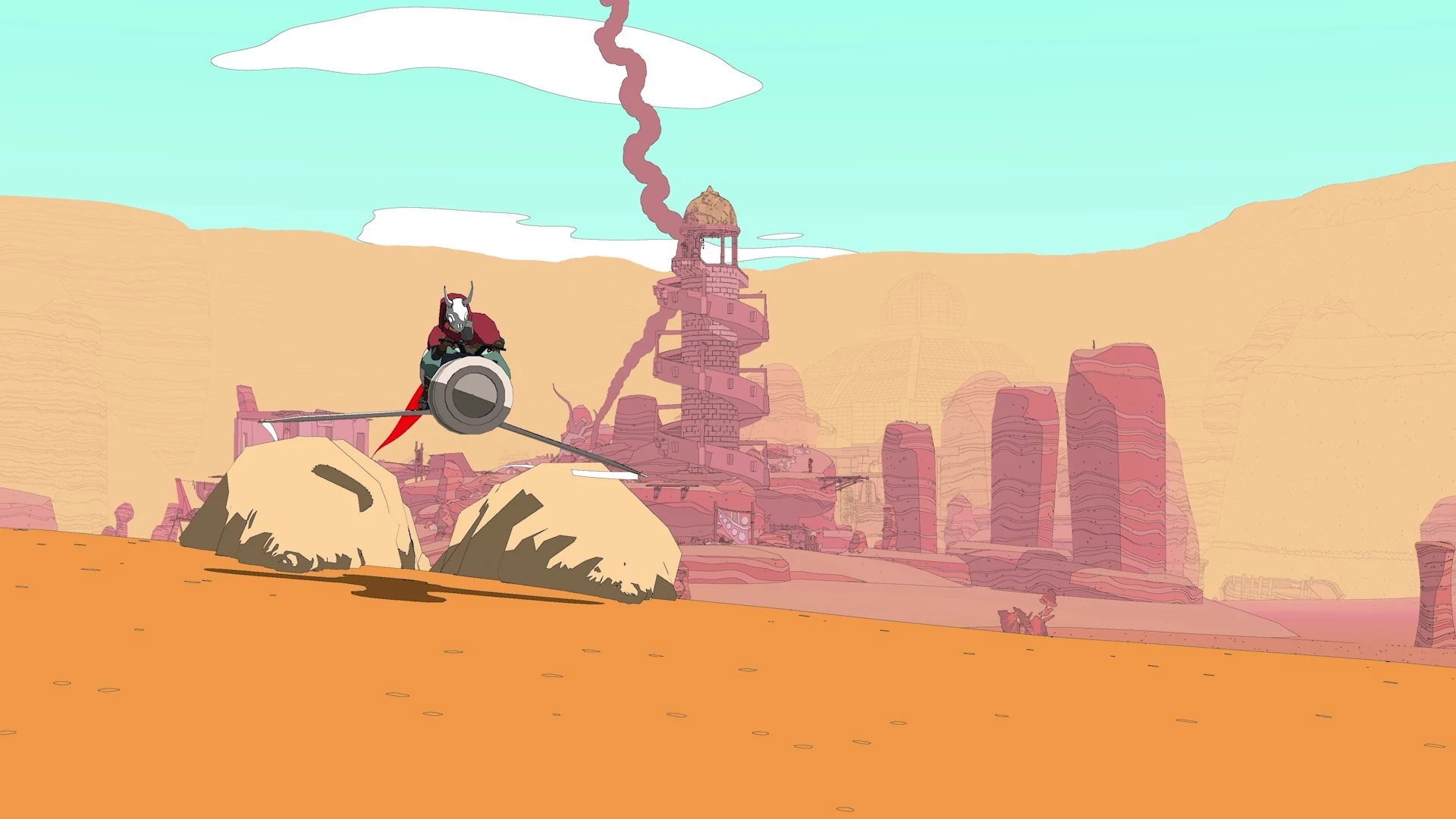
Sable makes choosing a direction the central act of an adventure. Its desert journey rewards curiosity about places and people more than urgency, combat or a relentless chain of upgrades.
Game facts
- Developer
- Shedworks
- Publisher
- Raw Fury
- Released
- 23 September 2021
- Platforms
- Windows (Steam edition)
- Model
- Paid game
- PEGI
- 3 — Xbox UK edition edition; not a separate PC classification
- Players
- Single-player
- Length
- Short
- Difficulty
- 1 / 5 · Approachable
- Steam Deck
- Verified
PEGI source ↗ · Steam Deck status source ↗
Edition: Base game
The score, explained
The interest and responsiveness of the core decisions and actions.
How progression, exploration and goals fit together.
The coherence of the visual, musical and narrative presentation.
How clearly the game explains its rules and offers useful ways to engage.
The depth of optional goals, alternative approaches and reasons to return.
The First Hours
Sable begins by giving departure emotional weight, then opens a desert in which a distant shape can be reason enough to change direction. The hoverbike makes that invitation practical: travel becomes a broad sweep across space before a ruin, settlement or formation draws you into a slower climb. Stamina gives those climbs a boundary to consider, but combat is not waiting to interrupt every approach. The early journey establishes identity through the Gliding and the masks associated with different roles, making the question of where to go part of the question of who Sable might become. This is not an opening built around urgent pursuit. Its appeal comes from allowing an interesting sight or a conversation to become the next small purpose of the trip.
Why It Works
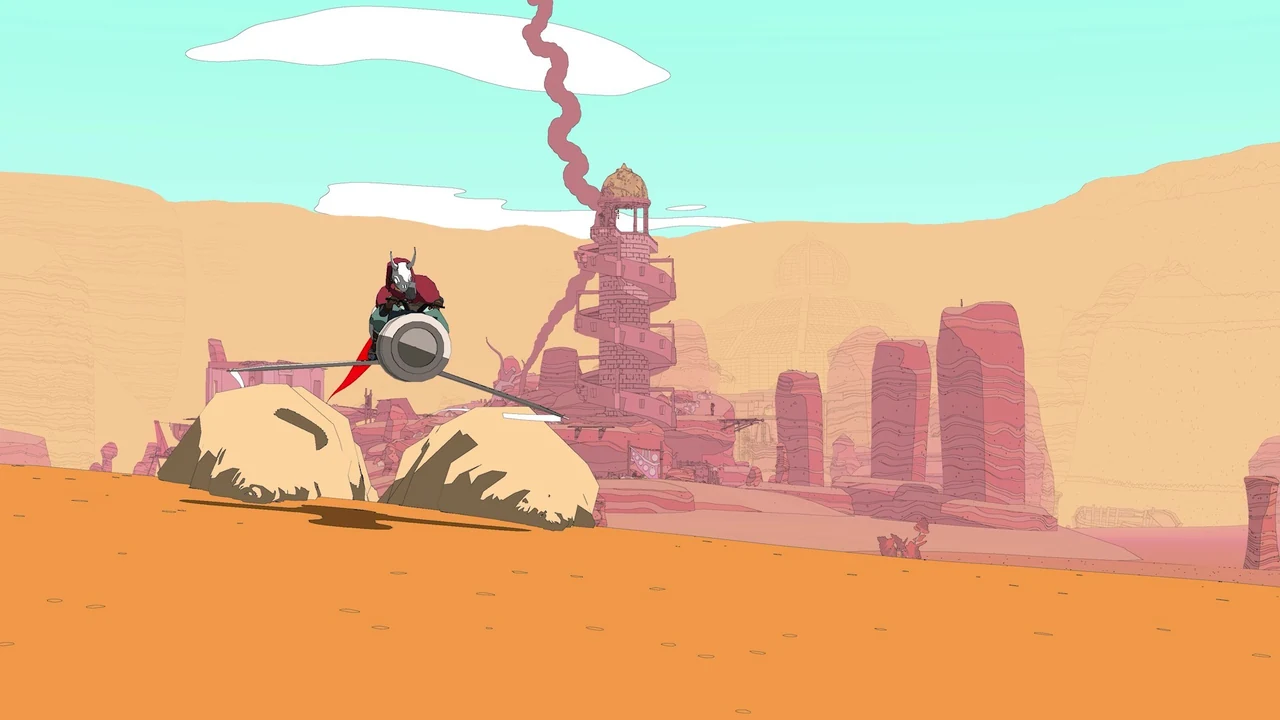
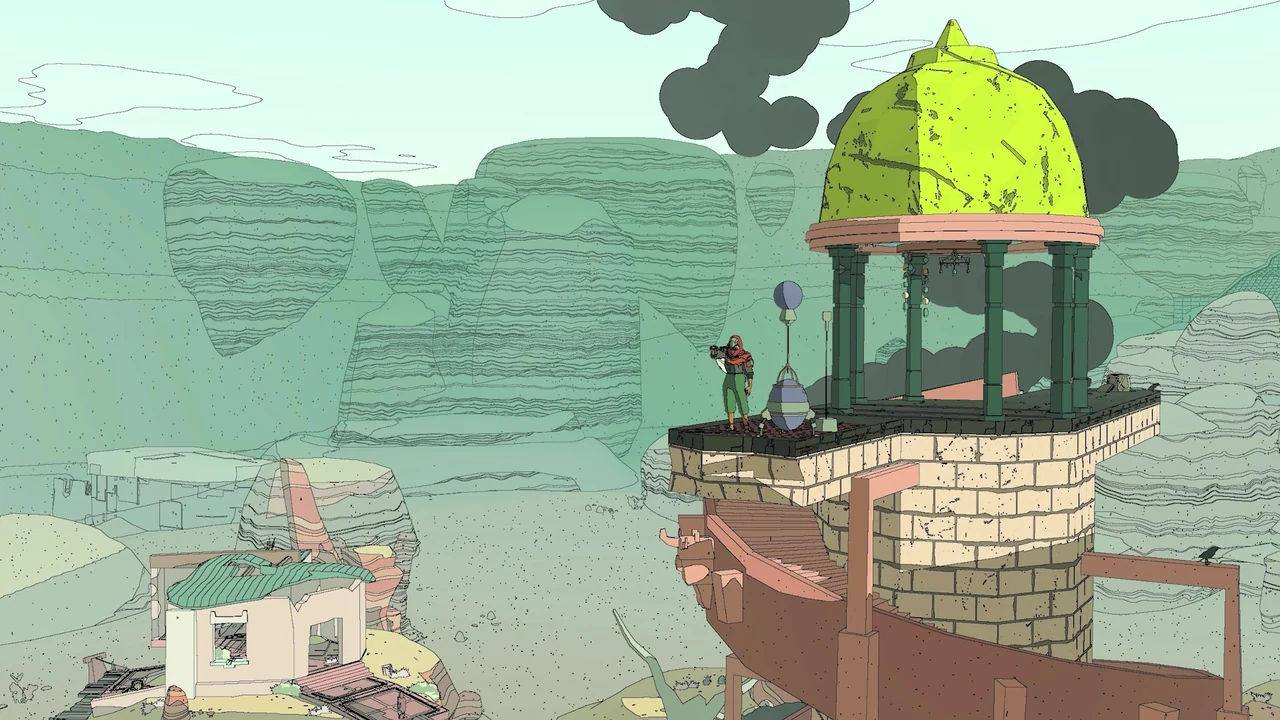
Sable works when movement and curiosity support each other. Crossing open ground creates anticipation, while climbing a structure changes a distant landmark into a sequence of reachable surfaces. The distinctive linework keeps those landmarks visually memorable, giving direction a stronger role than a crowded field of enemies could. Tasks and mask-related pursuits add enough structure to connect the wandering to people and possible identities. Yet they do not entirely replace the player's own itinerary. You can value a detour because of what it reveals about the world or because reaching the top of something felt worthwhile. The absence of a constant combat loop helps preserve that balance. It leaves attention available for scale, routes and the quieter question of what a place means to the people using it.
Where It Stumbles
Freedom can become drift when none of the visible possibilities feels especially compelling. Sable's loose structure does not always provide a strong external reason to continue, and some tasks ask for travel or errands that are less interesting than the landscapes around them. The initial pleasure of moving through striking scenery can also diminish if the traversal itself stops presenting fresh decisions. Players who rely on combat, escalating equipment or tightly staged revelations to maintain momentum may feel that absence sharply. Climbing limitations can interrupt an appealing route without turning the interruption into a particularly rich problem. The game therefore depends on more than admiration for screenshots. Its pace asks you to enjoy deciding where to go, including stretches when the reward is a new perspective rather than a dramatic event.
Who Should Play It
Sable is a good choice when you want an adventure that leaves room for a personal itinerary. It suits players who enjoy seeing something unusual on the horizon and investigating without first needing a formal objective. The combination of bike travel, climbing and conversations provides enough activity to make the desert more than a backdrop, but the pace remains deliberately spacious. Compared with an action adventure, it trades the urgency of fighting for the quieter satisfaction of choosing a route. Compared with free construction, it offers a world already filled with people and places to discover. Pick it when that balance sounds restorative rather than empty. If a game needs constant resistance or a sharply directed plot to hold your attention, another kind of journey will be a better match.
The verdict
Sable makes choosing a direction the central act of an adventure. Its desert journey rewards curiosity about places and people more than urgency, combat or a relentless chain of upgrades.
Reasons to play
- Distant landmarks invite genuinely self-chosen detours
- Bike travel and climbing create complementary rhythms
- Mask quests connect exploration to personal identity
Reasons to think twice
- Loose direction can leave the next purpose unclear
- Traversal and errand repetition may outlast the initial visual novelty
See the game
Assist & accessibility
Explore the available settings and control options on the official game page before choosing your setup.
Parents’ guide
Players: Single-player. No in-game purchase marker in the checked Steam listing. Separate downloadable content may be sold.
Age classification: 3. Xbox UK edition edition; not a separate PC classification
A useful starting tip
Choose one visible landmark and investigate it fully before turning the whole desert into a list of competing destinations.
A different direction
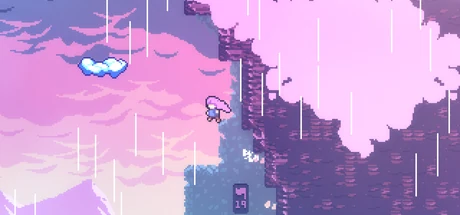
Compare this with Celeste: Celeste makes improvement legible: a room that seemed impossible becomes a sequence you understand. Optional challenges and Assist Mode let that central achievement support very different ambitions.
Official sources
Reviewed: November 2026
You might also like
 HadesRead review →
 CelesteRead review →
 Dead CellsRead review →